How does a bridal boutique take appointments online without double-booking a fitting room?
Most independent boutiques take bookings three ways at once: the paper book at the desk, direct messages on Instagram, and whatever their store system offers. BridalLive and Bridal Web Solutions both keep a scheduler, and both are perfectly capable of holding an appointment. The risk is rarely the scheduler itself. It is that the store is booking from more than one place and reconciling them by memory.
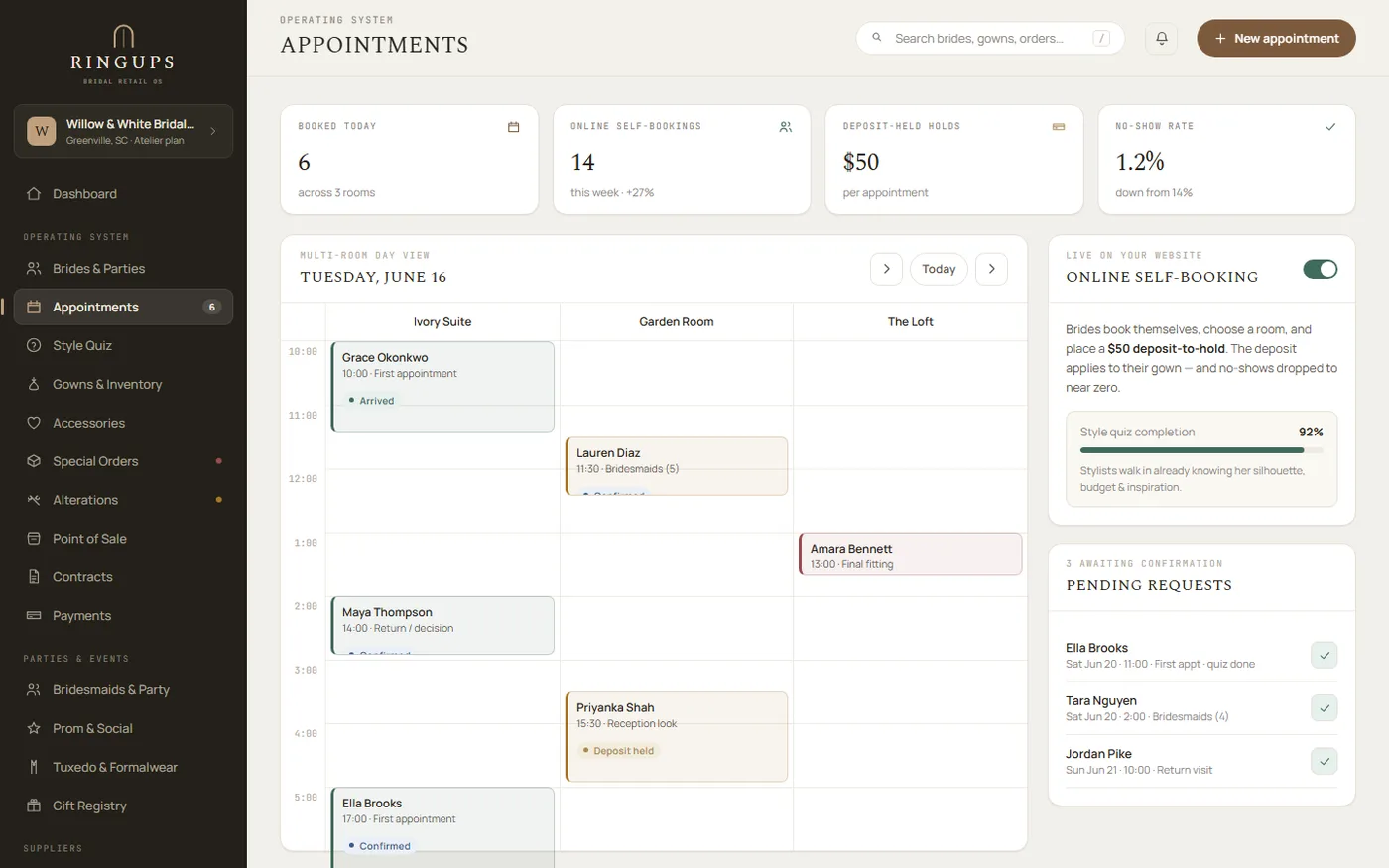
The safe shape is one book with one gate in front of it. Every path into the diary, whether that is a bride on her phone at 11pm or a consultant on the phone at the counter, goes through the same function, and that function is the only thing allowed to write an appointment. If the check and the write happen in one place inside the database, holding a lock on the day, the race that produces two brides in one room stops being possible rather than becoming unlikely.
That is how RingUps is built, and it is how an independent bridal boutique runs its Saturdays. It is worth asking any system you are considering the plain version of the question: if two people click the same slot in the same second, which one gets it, and what stops the other.