What does RingUps do about bridal special orders?
A special order is a gown that does not exist yet. The bride chooses it from a sample, the store buys it from the designer in her size and colour, and a mill somewhere cuts it. Between the sale and the wedding there is a production lead time nobody in the store controls, a shipping window nobody in the store controls, and an alterations window the store absolutely does control. RingUps holds all three against one fixed date, which is the wedding.
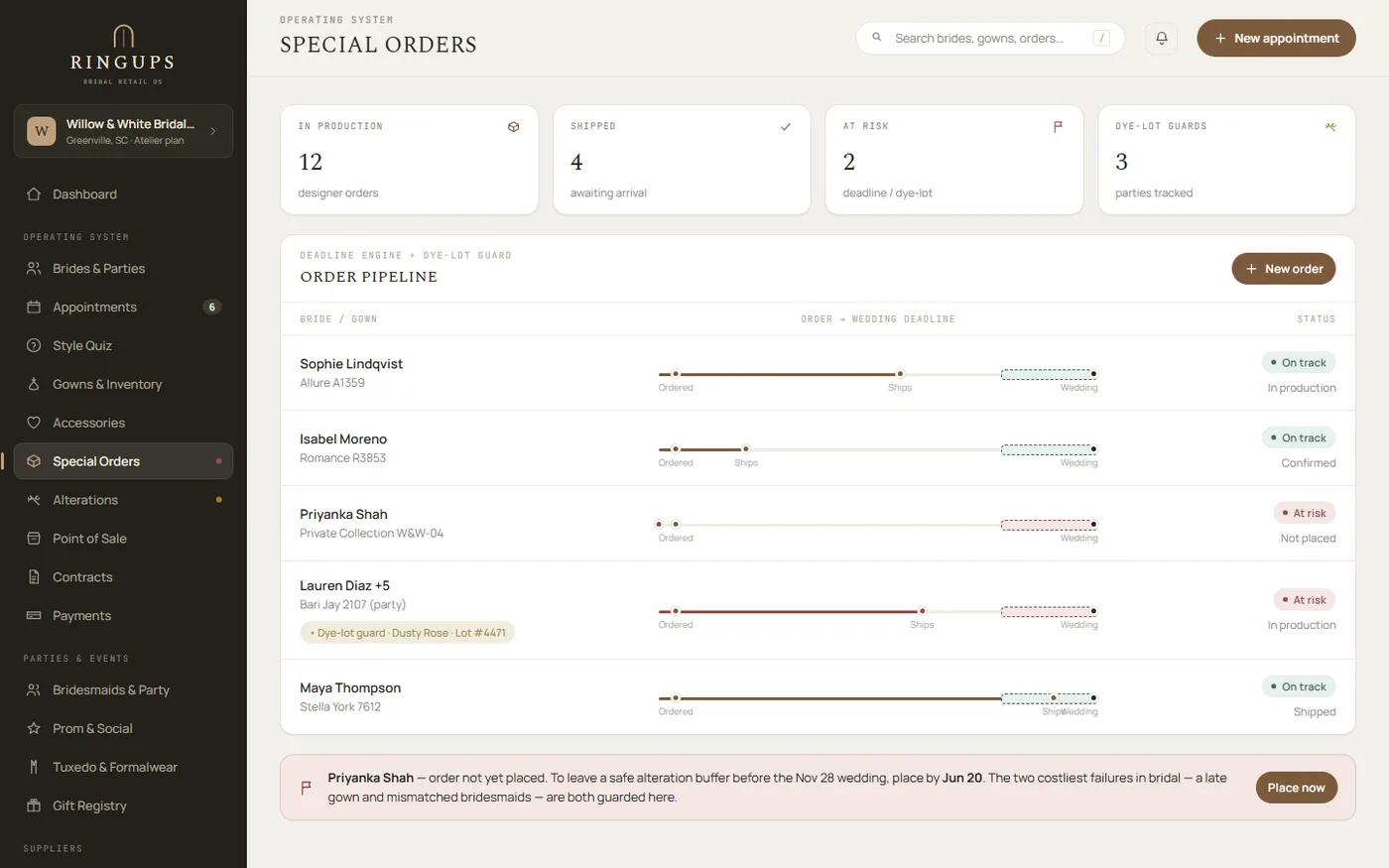
Two things on this page are enforced by the software rather than remembered by a person. The first is the deadline engine, which computes the date a gown has to be physically in the building and re-classifies every open order whenever a designer moves a ship date. The second is the dye-lot guard, which runs at the write path when a purchase order is placed and refuses the placement outright when it would split a wedding party across dye lots.
Everything else on the ordering board exists to make those two answerable at a glance. What that costs you is on the pricing page.