The problem
Why does a stock count stop being true in a bridal store?
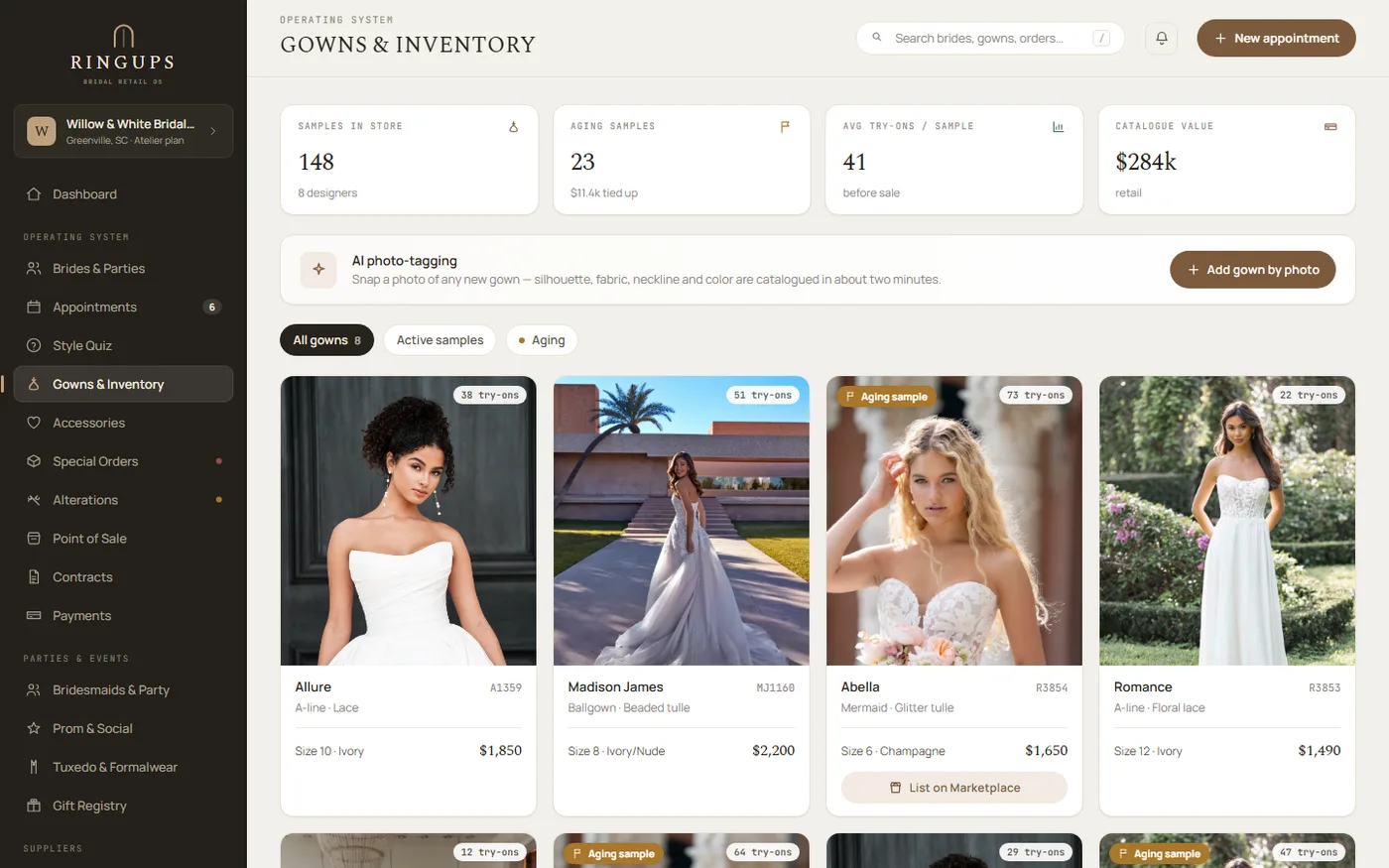
Because three is never three. One sample is on a bride in room two, one went to the cleaner after a trunk show, and one has a hook missing at the back. A quantity field cannot hold any of that, so the count drifts, and once it drifts nobody trusts it again. The knowledge moves into a consultant's head and a pencil note on a rack tag.
This is measurable, and it is measurable inside the system a store already pays for. When an independent bridal boutique's data was reconciled during the move off Bridal Web Solutions, two screens in that same system gave two answers for the same question.
Category Defaults said 655 units in stock. The store's own inventory export, from the same system, said 506.
Reconciliation finding, verified 4 August 2026
Bridal Web Solutions is a deep system dating to 2006, and depth is not the issue. Configuration is. Its own reports flagged 14 of the store's 22 primary suppliers as never fully set up, and 82 categories hidden. Depth you will never finish configuring is not capability. Before you compare systems, ask an owner to reconcile their current one against itself.